

Sugi Bonsai
NAKANO GYOZAN 中野 行山 "Hand signed 爪描き" - 常滑 - 41.2cm NOT FOR SALE Oval Unglazed (楕円形 無釉)
NAKANO GYOZAN 中野 行山 "Hand signed 爪描き" - 常滑 - 41.2cm NOT FOR SALE Oval Unglazed (楕円形 無釉)
Couldn't load pickup availability
Personal Collection: Not for Sale!
But if you really want it, ping me!
Product Details / 鉢の詳細
Region / 産地: Tokoname 常滑市, Aichi Prefecture 愛知県, Japan 日本
Kiln / 窯元: Gyozan Kiln(行山窯)
Potter / 作家: 1st Generation Gyozan – Nakano Yukizyou(初代 行山・中野行常)
Form / 形状: Oval(楕円鉢 – daen-bachi)
Finish / 仕上げ: Unglazed(無釉 – muyu)
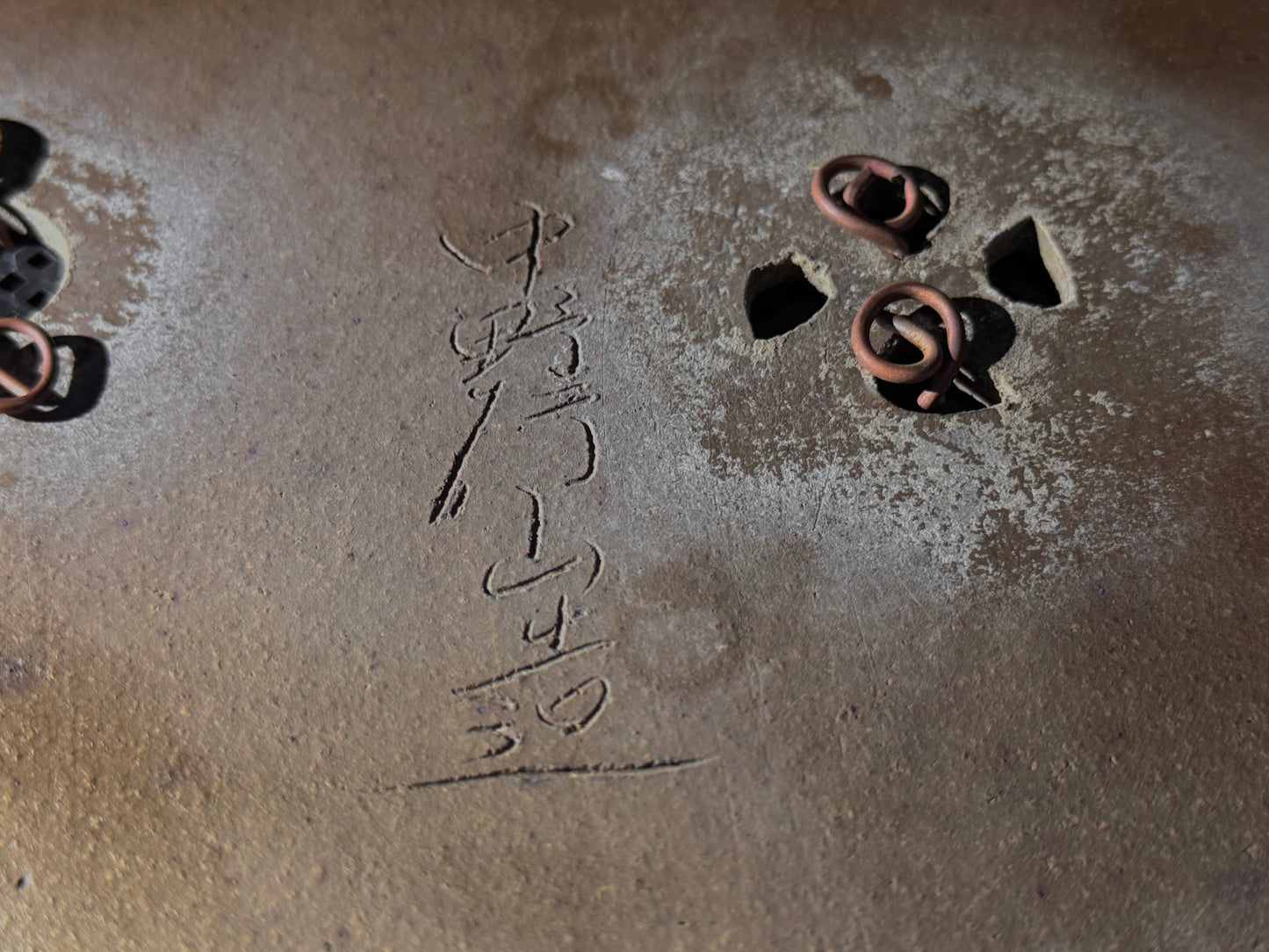
Hand Signed / 手彫り銘: 爪描き(tsumegaki)
Description / 説明
A substantial and beautifully crafted vintage Japanese Tokoname bonsai pot(常滑焼盆栽鉢) by 1st Generation Gyozan, Nakano Yukizyou(初代 行山・中野行常), produced in Tokoname, one of Japan's most important centres for bonsai ceramics.
Formed as a generously proportioned oval pot(楕円鉢), this piece possesses the quiet strength and disciplined refinement characteristic of Gyozan's work. The warm brown unglazed Tokoname clay (常滑無釉土) displays an attractive natural 土味(tsuchi-aji – clay character), with subtle tonal and firing variations enriching the surface.
The long oval silhouette is particularly successful. The walls descend with a restrained inward inclination towards the base, while the uninterrupted curvature of the oval gives the substantial container an elegant and controlled profile.
The result achieves an excellent balance between 力強さ(strength) and 品格(dignity), creating a calm 落ち着きのある佇まい and a strong sense of 均衡(kinko – balance).
The upper construction is particularly distinctive. A substantial rounded and projecting lip(口縁 – koen) crowns the vessel. Directly beneath it is a broad, shallow upper band(上帯), separated from the principal wall by a finely defined horizontal line.
This layered treatment of the 口縁 and 上帯 creates a strong architectural frame around the mouth of the pot without disturbing the simplicity of the oval body. It is a restrained detail, yet one that gives the pot considerable visual depth and demonstrates Gyozan's precision of construction.
The lower body is framed by a continuous and carefully defined basal band(下帯). The wall draws gently inward before meeting this lower band, creating a controlled transition from the principal body towards the feet.
The relationship between the upper band(上帯), body (胴), lower band(下帯) and feet (足) is particularly harmonious, producing the understated refinement traditionally associated with 渋み(shibumi).
The vessel stands on four beautifully executed recessed cut feet(切足・内込み足). Positioned substantially beneath the body rather than projecting beyond its silhouette, the feet allow the continuous oval line to remain visually dominant.
Each foot follows the curvature of the vessel and terminates in a subtly angled cut. Their recessed position creates a controlled shadow beneath the 下帯, visually lifting the substantial body while maintaining excellent 安定感(anteikan – stability).
This carefully considered relationship between 鉢身(pot body) and 足(feet) is an important element of the design: the feet support and visually elevate the form without competing with it.
The underside (鉢底) is equally noteworthy and demonstrates Gyozan's considerable attention to the functional aspects of bonsai-pot construction.
At the centre is the distinctive arrangement of smaller apertures associated with Gyozan pots, accompanied by larger drainage holes(排水穴) and additional smaller wiring holes(針金穴) distributed around the base.
The principal drainage apertures are protected with mesh(鉢底網), secured using traditional copper wire(銅線).
This carefully considered arrangement provides effective drainage and numerous anchoring positions while illustrating the philosophy of 用の美(yo no bi – beauty through function) so evident in Gyozan's work.
Most importantly for attribution, the underside carries a hand-incised 爪描き銘(tsumegaki-mei), cut individually into the clay.
The presence of this 爪描き identifies the pot as a hand-signed work of 1st Generation Gyozan, rather than a seal-only example associated with the second generation.
Overall, this is a substantial and highly refined example of Tokoname unglazed bonsai pottery(常滑無釉盆栽鉢), combining excellent 土味, controlled proportions (均整の取れた造形), refined 上下帯, recessed 切足, carefully considered drainage and the important 爪描き銘.
Its character is beautifully expressed through 渋み(shibumi), 品格(hinkaku) and 用の美(yo no bi) — beauty created through proportion, function and craftsmanship rather than unnecessary ornamentation.
External Dimensions / 外寸: 41.2 × 32.0 × 11.0cm
Internal Dimensions / 内寸: 37.0 × 27.5 × 9.0cm
Condition / 状態: Excellent(非常に良好)
Free Shipping to UK Mainland / 英国本土送料無料
Potter's History / 作家略歴 – 1st Generation Gyozan 初代行山
Nakano Gyozan(中野行山), 1st Generation Gyozan(初代行山), was one of the highly regarded makers associated with the modern Tokoname bonsai-pot tradition.
The Gyozan Kiln(行山窯) was established in Tokoname in 1972, and over the following decades Gyozan developed a reputation for producing exceptionally well-considered bonsai containers in which aesthetic refinement and practical cultivation requirements were treated with equal importance.
Central to his work was the principle of 用の美(yo no bi – beauty through function). Rather than treating a bonsai pot simply as a decorative ceramic object, Gyozan carefully considered the relationship between the tree, planting chamber, rim, walls, feet, drainage and anchoring system.
His unglazed pots became particularly appreciated for their controlled proportions, precise lines, carefully formed feet and the natural character of their Tokoname clay (土味).
Even the underside of a Gyozan pot frequently demonstrates considerable attention to detail. Carefully arranged 排水穴 and 針金穴, together with individually considered foot construction, form part of the functional and aesthetic identity of his work.
Of particular importance are pots carrying Gyozan's characteristic hand-incised 爪描き(tsumegaki)signature. These hand-signed examples form part of the personally worked output of 1st Generation Gyozan and should be distinguished from the seal-only(印のみ) pots associated with the second generation.
Nakano Gyozan passed away in February 2026, during the historic period of the 100th Kokufu Bonsai Exhibition(第100回国風盆栽展). His passing brought to a close the working life of an important figure within modern Tokoname bonsai ceramics, and his personally made and hand-signed pots now constitute a finite body of work.
Collector's Note / コレクターズノート
This substantial 41.2cm oval pot(楕円鉢) is a particularly refined example of 1st Generation Gyozan's approach to classical unglazed bonsai pottery.
The strong rounded 口縁, shallow 上帯, gently inward-drawing body and carefully defined 下帯 create a beautifully controlled progression from the mouth of the pot to its lower structure.
The four recessed 切足 follow the curvature of the oval rather than interrupting it, allowing the long flowing silhouette to remain the dominant feature. The resulting shadow beneath the lower body gives the substantial pot visual lift while maintaining excellent 安定感.
The underside is equally important. Its characteristic arrangement of drainage and wiring apertures demonstrates the practical sophistication of Gyozan's work and reflects the principle of 用の美, where functional elements form an integral part of the overall craftsmanship.
Most significant for attribution is the hand-incised 爪描き銘 on the underside. This places the pot within the hand-signed work of 1st Generation Gyozan, Nakano Yukizyou(初代 行山・中野行常), rather than the seal-only production of the second generation.
The combination of its substantial 41.2cm size, beautifully controlled oval proportions, warm unglazed Tokoname clay, mature 土味, refined 上下帯, recessed 切足, characteristic drainage arrangement and hand-incised 爪描き gives the pot considerable collector interest.
Following Nakano Gyozan's passing in 2026, surviving hand-signed examples such as this belong to a completed and finite body of work by 1st Generation Gyozan, preserving an important expression of the Tokoname tradition and the philosophy of 用の美 — functional beauty.
Share