

Sugi Bonsai
SYU-ZAN 舟山, (Suzuki Shinji 鈴木伸二) – 愛知県 – 40.3cm Oval 楕円形 – Unglazed 無釉
SYU-ZAN 舟山, (Suzuki Shinji 鈴木伸二) – 愛知県 – 40.3cm Oval 楕円形 – Unglazed 無釉
Couldn't load pickup availability
Region / 産地: Aichi Prefecture(愛知県), Japan 日本
Workshop / 工房: Togo, Aichi Prefecture(愛知県東郷)
Potter / 作家: Syu-Zan(舟山)– Suzuki Shinji(鈴木伸二)
Form / 形状: Oval(楕円形 – daen-gata)
Finish / 仕上げ: Unglazed(無釉 – muyu)
Mark / 落款: Decorative impressed Syu-Zan seal(舟山印)
Description / 説明
A substantial vintage artisan-made Japanese bonsai pot(和鉢 – wabachi)by the highly regarded Syu-Zan(舟山), Suzuki Shinji(鈴木伸二), displaying the restrained proportions, beautiful clay character(土味 – tsuchi-aji)and quiet strength associated with his unglazed work(無釉鉢 – muyu-bachi).
The pot is formed in a classical oval shape(楕円形 – daen-gata), with a notably low and broad profile(低い姿 – hikui sugata)that strongly emphasises horizontal movement. The long sides have a subtle outward sweep towards the upper edge, while the ends curve naturally into the oval form, creating an elegant and harmonious silhouette(姿 – sugata).
The upper edge is finely and simply finished with a restrained rim(縁 – fuchi), following the continuous oval outline without disturbing the simplicity of the body. This understated treatment gives the pot an excellent sense of shibumi(渋み), the quiet and restrained refinement particularly admired in traditional Japanese ceramics.
The walls taper gently towards the base, producing a strong but elegant stance(安定感 – anteikan). The pot is supported by very low integrated feet(足 – ashi), discreetly incorporated into the lower profile. Their restrained construction creates a slight visual lift(浮遊感 – fuyukan)while preserving the broad horizontal character of the vessel.
The unglazed clay(無釉土 – muyu-tsuchi)is particularly attractive, displaying warm brown through muted brown-grey tones with a fine granular texture and subtle firing variations(焼き味 – yaki-aji)across the surface.
The clay possesses excellent tsuchi-aji(土味) — the natural colour, texture and character of the ceramic body — an especially important quality in traditional unglazed bonsai pots(泥物鉢 – deimono-bachi).
Decades of age and use have further enriched the surface, developing a beautiful natural patina(経年の味わい – keinen no aji). Under changing light, the slightly irregular clay catches subtle highlights, revealing variations in texture and colour that give the pot considerably more depth than a uniform modern surface.
The overall character is one of quiet elegance(静かな美 – shizukana bi). There is no unnecessary ornament competing with the bonsai. Instead, the beauty of the pot comes from the relationship between form(形), clay(土), proportion(均整)and aged surface(経年変化).
The underside bears Syu-Zan's distinctive decorative impressed seal(舟山印). Rather than a simple written signature(銘), the close-up reveals an elaborate pictorial potter's mark(落款 – rakkan), with the characters 舟山 incorporated into a highly stylised emblematic design.
This combination of 楕円の姿 (oval form), 土味 (clay character), 渋み (understated refinement), 経年の味わい (aged character), and 安定感 (visual stability) gives the pot the quiet authority expected from an important vintage Japanese bonsai container.
With its substantial 40.3cm width, subdued colouring and strong horizontal line, this would make an excellent container for a mature bonsai where the pot must provide visual stability while remaining subordinate to the tree.
External Dimensions / 外寸: 40.3 × 30.3 × 6.8cm
Internal Dimensions / 内寸: 36.6 × 26.6 × 5.4cm
Condition / 状態: Very Good / 良好
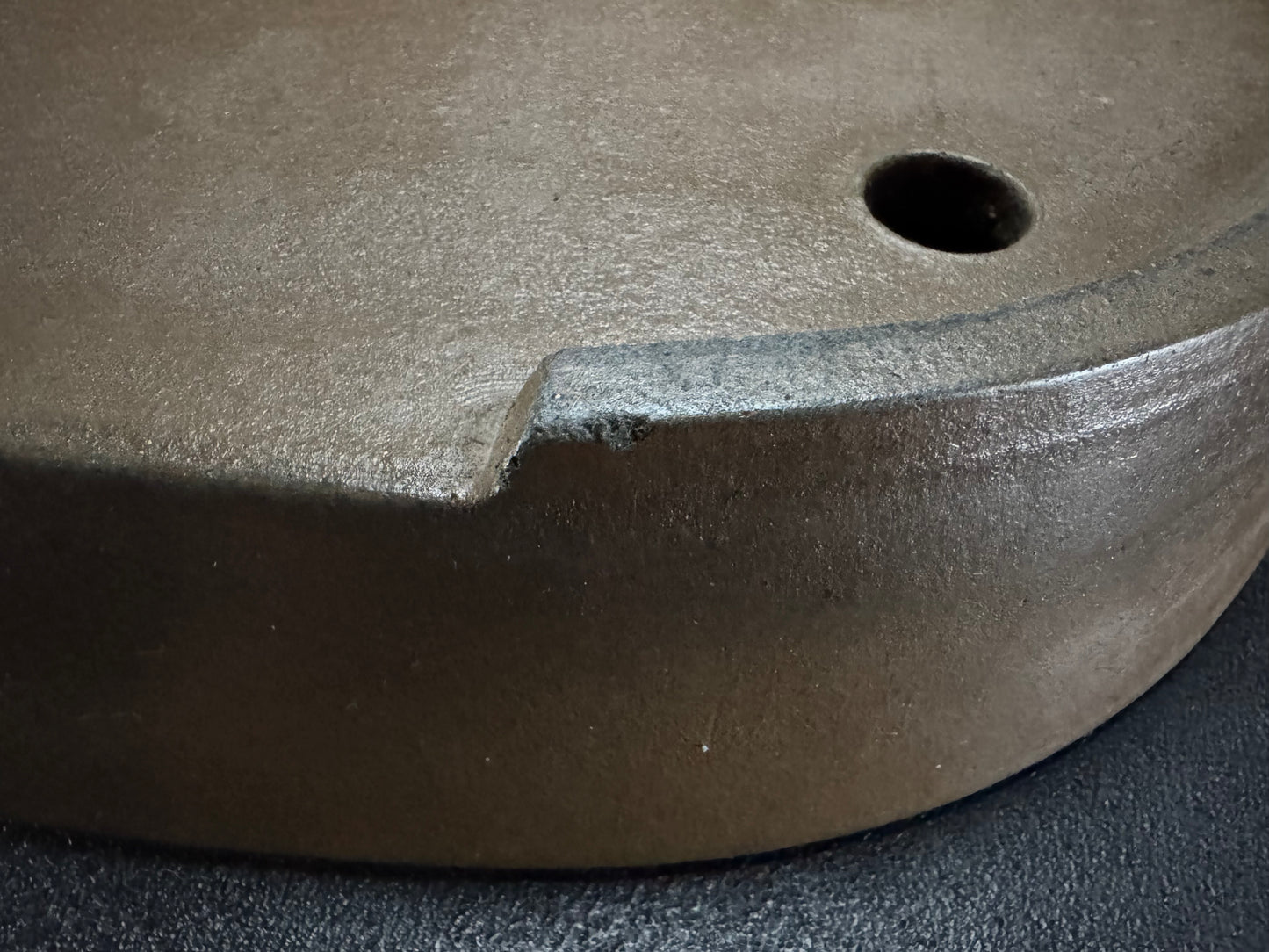
There are two small chips(小さな欠け)to the outside of one foot(足). These have been taken into consideration in the price, which has been reduced accordingly. The pot otherwise presents extremely well and retains the beautiful aged character(経年の味わい)of the clay.
Free Shipping to UK Mainland / 英国本土送料無料
Collector's Note / コレクターズノート
Suzuki Shinji(鈴木伸二), artist name Syu-Zan(舟山), 1928–1988, is regarded as an important Japanese bonsai-pot maker(盆栽鉢作家)of the post-war period. Born in Tsu City, Mie Prefecture(三重県津市), Suzuki initially pursued a career in banking before leaving the profession in 1971, at the age of 43, to devote himself fully to the creation of bonsai pots(盆栽鉢).
Working in Togo, Aichi Prefecture(愛知県東郷), Syu-Zan developed a distinctive ceramic language strongly influenced by classical Chinese bonsai containers(中国古鉢 – Chugoku kobachi), particularly the antique pottery traditions associated with Yixing(宜興).
Of particular importance was his fascination with the clay itself(土 – tsuchi). Syu-Zan experimented with blended clay bodies, including Chinese and Japanese clays, seeking the colour, texture and depth associated with antique Chinese containers. This emphasis on the natural character of the material resulted in the distinctive tsuchi-aji(土味) for which his unglazed pots(無釉鉢)are particularly appreciated.
Rather than simply reproducing antique Chinese forms, Syu-Zan interpreted their proportions and restrained aesthetic through a distinctly Japanese sensibility(日本的美意識 – Nihonteki bi-ishiki). His finest pots rely upon subtle relationships between form(形), rim(縁), feet(足), clay character(土味)and balance(均整), rather than excessive decoration.
This large oval is an excellent expression of that philosophy. Its low profile(低い姿), broad proportions, restrained rim(縁), discreet feet(足)and richly textured unglazed clay(無釉土) combine to produce considerable presence while retaining the desirable qualities of shibumi(渋み)and anteikan(安定感).
Despite his relatively short professional pottery career, from 1971 until his death in 1988, Syu-Zan 舟山 became highly respected within Japanese bonsai circles. His artistic influence continued through his apprentice Sen-Syu(仙舟), who carried elements of his teacher's philosophy and ceramic approach into his own work.
This particular example is especially attractive for its substantial 40.3cm size, classical oval form(楕円形), warm aged clay(経年の土味), understated refinement(渋み)and distinctive impressed 舟山 seal(舟山印) — qualities that together express the quiet confidence and respect for classical form that make Syu-Zan's work so appealing to collectors of Japanese bonsai ceramics(盆栽鉢愛好家).
Share