

Sugi Bonsai
HAYASHI TOJAKU 林陶雀 – Tojaku 陶雀 – Hayashi Tadashi 林忠 – 10.4cm Not For Sale! Rectangular 長方形 – Bamboo-Basket Motif 竹編み文様 – Unglazed 無釉
HAYASHI TOJAKU 林陶雀 – Tojaku 陶雀 – Hayashi Tadashi 林忠 – 10.4cm Not For Sale! Rectangular 長方形 – Bamboo-Basket Motif 竹編み文様 – Unglazed 無釉
Couldn't load pickup availability
Personal Collection: Not for Sale!
But if you really want it, ping me!
Product Details / 鉢の詳細
Region / 産地: Kansai 関西 – Kyoto/Osaka tradition 京都・大阪
Potter / 作家: Hayashi Tojaku 林陶雀
Art Name / 陶号: Tojaku 陶雀
Personal Name / 本名: Hayashi Tadashi 林忠
Born / 生年: 1935, Kyoto 京都
Form / 形状: Rectangular 長方形鉢
Decoration / 意匠: Bamboo-Basket Motif 竹編み文様
Finish / 仕上げ: Unglazed 無釉
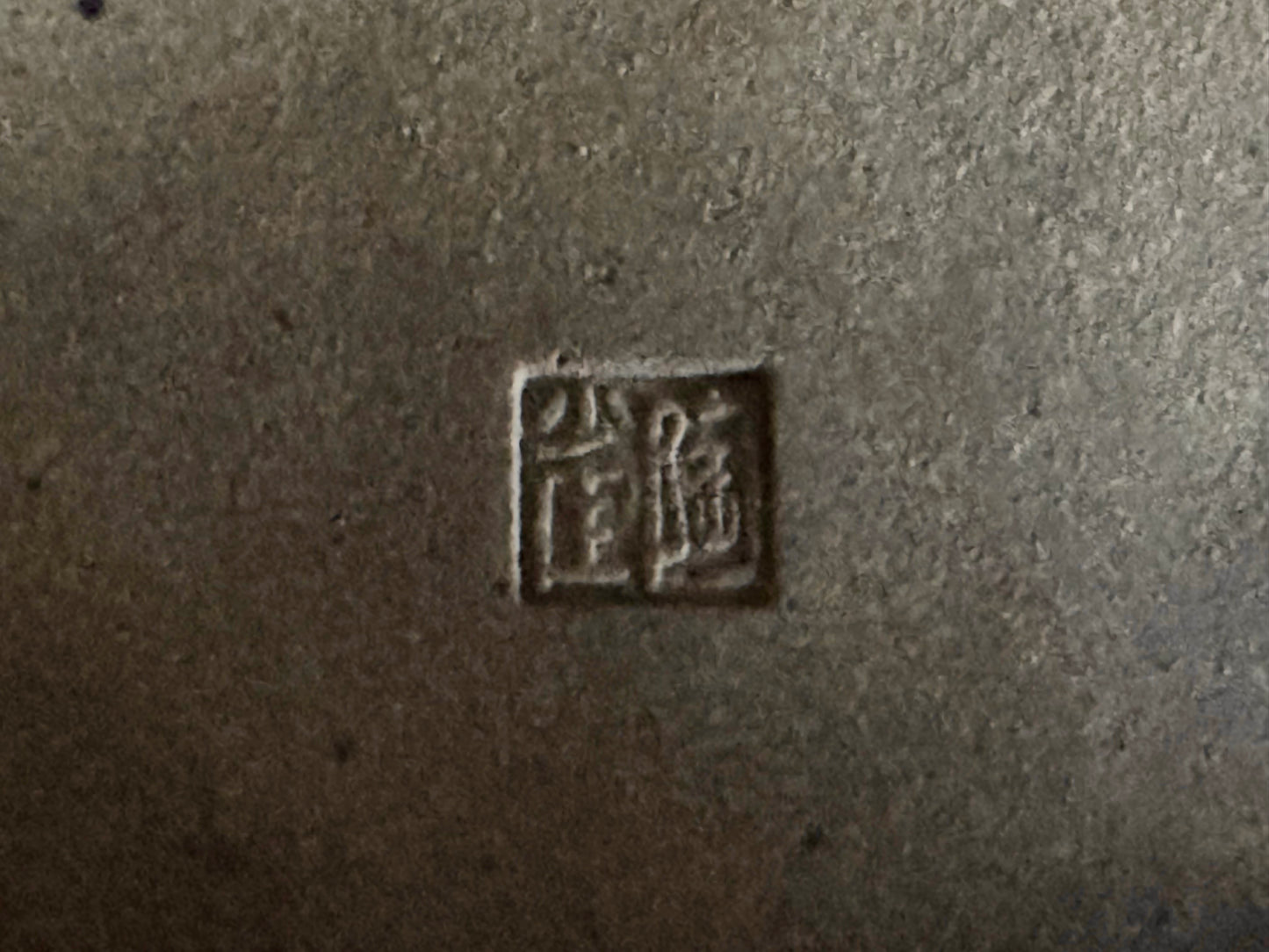
Marking / 陶印: Impressed square Tojaku seal 「陶雀」角印
Description / 商品説明
A finely crafted vintage Japanese bonsai pot by Hayashi Tojaku 林陶雀, art name 陶雀, one of the pioneering figures associated with the development of modern mame and shohin pots(豆鉢・小品鉢) in the Kansai region.
At only 10.4cm, this compact rectangular vessel (長方形鉢) combines disciplined proportions with one of its most distinctive features: an intricate bamboo-basket motif(竹編み文様) worked across the exterior.
The basket-like decoration creates an interwoven geometric pattern reminiscent of traditional Japanese bamboo craft(竹細工). The repeating lattice gives the walls considerable rhythm and texture while remaining subordinate to the overall rectangular form. This restrained relationship between ornament and structure gives the pot an appealing sense of 調和 (chowa – harmony) and 品格 (hinkaku – dignity).
The upper opening is defined by a carefully formed internal rim(内縁), creating depth around the planting area and a clean architectural frame. The outer rim(口縁) is subtly defined, providing an elegant transition between the decorated walls and upper perimeter.
The pot is supported by carefully formed stepped feet(段足), giving the small vessel sufficient visual lift while maintaining a strong, stable stance. The relationship between the structured walls, bamboo-basket decoration and 段足 gives the pot a particularly convincing sense of 造形美 (zokeibi – beauty of form) despite its diminutive scale.
The unglazed clay has a warm reddish-earth character with subtle granular texture (砂気のある素地). Its natural clay surface(土肌) has acquired gentle 経年変化 (kenen henka) and an attractive subdued 古色 (koshoku – aged coloration), bringing additional depth to the recesses of the bamboo-basket pattern.
These qualities give the surface an appealing 土味 (tsuchi-aji) and 渋み (shibumi), allowing the clay and relief work to become more expressive with age rather than relying on glaze for decorative effect.
The base incorporates two circular drainage openings(排水穴), providing the practical functionality required for cultivation while maintaining the simplicity of the miniature construction.
The underside carries Tojaku's impressed square maker's seal 「陶雀」角印, clearly identifying the work. The combination of small scale, elaborate 竹編み文様, natural 土肌 and functional construction reflects the Japanese principle of 用の美 (yo no bi – beauty through function).
At 10.4 × 8.1 × 3.5cm, this is an excellent size for mame(豆盆栽) or small shohin(小品盆栽), while its sculptural detailing also gives it considerable appeal as a collectible miniature ceramic work.
Dimensions / 寸法
External Dimensions / 外寸: 10.4 × 8.1 × 3.5cm
Condition / 状態
Excellent vintage condition / 非常に良好なヴィンテージコンディション
About the Potter / 作家について
Hayashi Tojaku 林陶雀, art name Tojaku 陶雀, personal name Hayashi Tadashi 林忠, was born in Kyoto in 1935 and became associated with the Osaka/Kansai ceramic community. Japanese specialist literature recognises him as one of the pioneering figures in the development of modern small-pot making in Kansai(関西小鉢).
Before concentrating on bonsai ceramics, Tojaku worked successfully in casting and applied craftwork(鋳造工芸) in Osaka. Influenced by his elder brother, who was professionally involved with shohin bonsai, Tojaku began teaching himself bonsai-pot making around 1965, eventually devoting himself seriously to small-pot production from approximately 1970.
His background in applied craftwork is particularly evident in his highly detailed 細工物 (saikumono – intricately worked pieces). This technical precision allowed him to introduce elaborate surface decoration, sculptural motifs and remarkably controlled detailing into very small functional containers.
Tojaku's work was highly varied, encompassing natural clay pieces, sculptural and carved decoration (彫刻・細工物), 辰砂釉 (shinsha-yu), 染付 (sometsuke) and 色絵 (iro-e). His contribution extended beyond his own pottery, with Japanese specialist literature recording his influence on numerous subsequent small-pot makers in the Kansai region.
Tojaku is now recorded by specialist bonsai-pot sources as deceased, although a dependable exact year of death remains difficult to establish. I would therefore refer to him respectfully as the late Hayashi Tojaku 林陶雀 without publishing an unsupported death year.
Collector's Note / コレクターズノート
This 10.4cm 竹編み文様長方形鉢 is a particularly attractive example of the late Hayashi Tojaku's ability to bring the precision of applied craftsmanship into the miniature world of Japanese bonsai ceramics.
The most compelling feature is the intricate bamboo-basket decoration(竹編み文様). Its repeated woven structure recalls traditional 竹細工, transforming the exterior into a highly textured architectural surface while preserving the disciplined proportions of the 長方形鉢. Together with the 内縁, carefully formed 段足 and naturally aged 土肌, it demonstrates the combination of decorative craftsmanship and practical construction characteristic of Tojaku's small-pot work.
The impressed square 「陶雀」角印 provides the identifying maker's mark and is an important feature for the collector. Its presence, together with the distinctive decorative treatment, gives the piece a clear connection to Tojaku's body of miniature work.
As one of the pioneers of modern Kansai small-pot culture, Tojaku occupies an important position in the development of post-war Japanese 豆鉢・小品鉢. His ability to combine 実用 (jitsuyo – utility) with 芸術性 (geijutsusei – artistry) allowed even extremely small containers to possess an individual artistic identity.
For the collector, the combination of compact 10.4cm scale, unusual 竹編み文様, aged unglazed 土肌, stepped 段足 and impressed 陶雀 seal makes this a distinctive example of Tojaku's craftsmanship and an appealing piece of Japan's modern miniature bonsai-pot tradition.
Share