

Sugi Bonsai
KEIZAN HISADA 久田桂山 – 2nd Generation 二代 – Hisada Sadao 久田貞雄 – Hand Signed 手彫り銘 & Seal 陶印 – 常滑 – 46.5cm Rectangular 長方鉢 – Unglazed 無釉
KEIZAN HISADA 久田桂山 – 2nd Generation 二代 – Hisada Sadao 久田貞雄 – Hand Signed 手彫り銘 & Seal 陶印 – 常滑 – 46.5cm Rectangular 長方鉢 – Unglazed 無釉
Couldn't load pickup availability
Product Details / 商品詳細:
Region / 産地: Tokoname 常滑市, Aichi Prefecture 愛知県
Kiln / 窯元: Hisada Kiln 久田窯
Potter / 陶工: 2nd Generation Hisada Keizan 二代 久田桂山 (Hisada Sadao 久田貞雄)
Style / 形式: Handmade rectangular unglazed Japanese bonsai pot 手作り長方無釉盆栽鉢
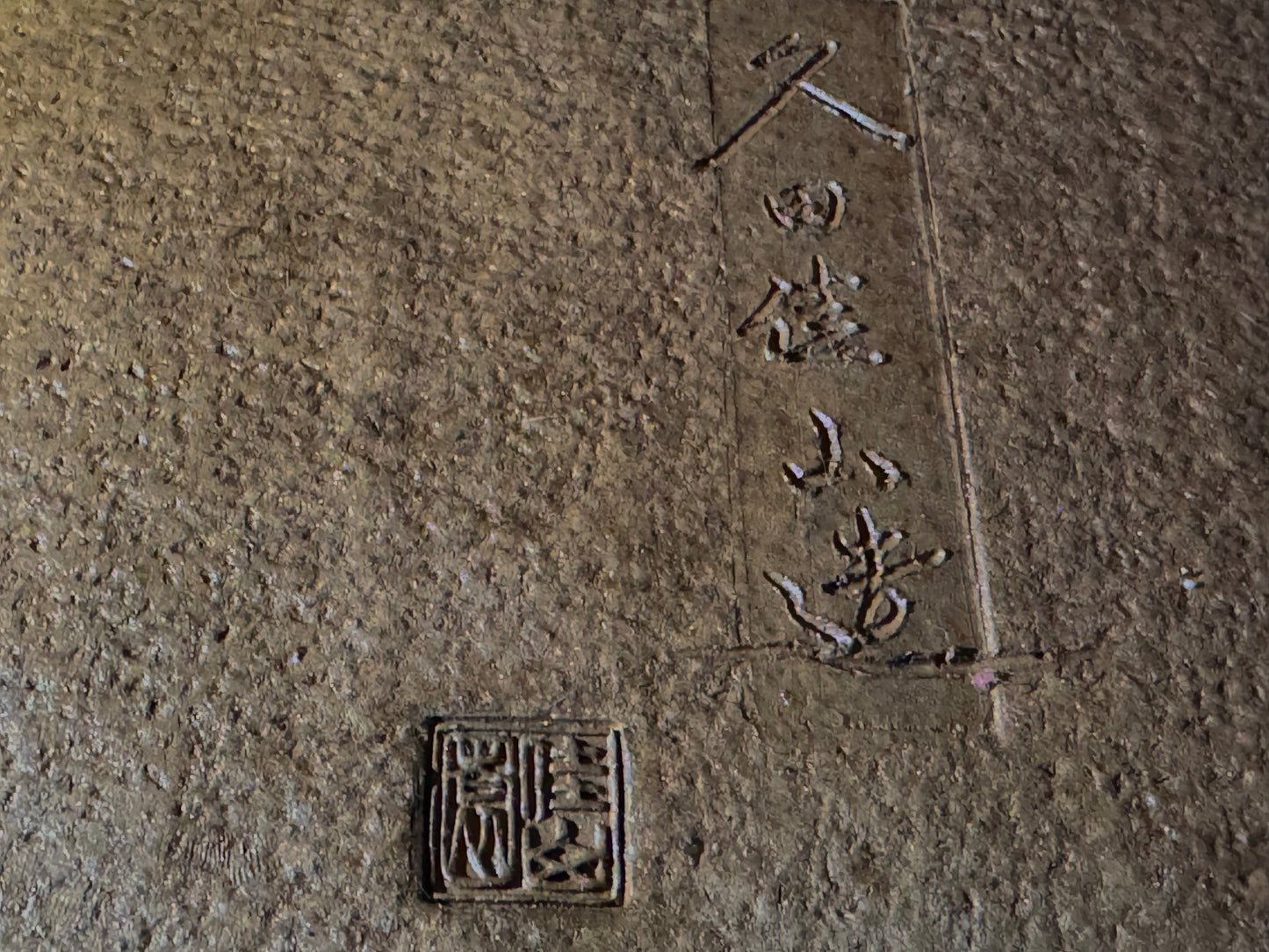
Signature & Seal / 銘・落款: Hand-incised nail signature 爪描き銘 and impressed square Keizan seal 桂山印 to the underside
Description / 説明:
A refined vintage artisan-made Japanese bonsai pot 日本盆栽鉢 (Nihon bonsai-bachi) by 2nd Generation Hisada Keizan 二代 久田桂山, Hisada Sadao 久田貞雄, produced at the renowned Hisada Kiln 久田窯 (Hisada-gama) in Tokoname 常滑.
This substantial rectangular form 長方鉢 (chouhou-bachi) is particularly distinguished by its strongly architectural construction. The body incorporates indented corners 隅入 (sumi-iri), gently outward-flaring walls 外反り (sotozori), carefully recessed decorative panels and a beautifully controlled relationship between the upper rim, lower band and feet.
The upper profile is especially refined. The walls rise outward into a pronounced projecting lip 口縁 (kouen), creating a broad and powerful upper silhouette. The lip itself carries a delicate raised border 縁取り (fuchidori) along its outer edge, providing definition without making the rim appear excessively heavy. This fine raised line follows the entire outline of the vessel, including its characteristic indented corners 隅入 (sumi-iri).
Immediately inside the mouth is a very subtle and almost unnoticeable internal recessed rim 内縁 (uchibuchi). This is an important detail of the construction: rather than presenting a heavy internal step, the transition from the upper lip 口縁 into the planting chamber 鉢内 (hachi-nai) is restrained and exceptionally clean. It gives the pot additional structural definition while remaining visually discreet.
Each principal face of the pot incorporates a recessed rectangular decorative panel 窓 (mado). These panels are surrounded by a finely executed raised border 縁取り (fuchidori), with small stepped details at the corners. The panels provide subtle decoration 装飾 (soushoku) while maintaining the restrained character 渋み (shibumi) expected from a high-quality unglazed Tokoname pot 常滑無釉鉢.
The lower body is defined by a clearly articulated basal band 下帯 (shita-obi). Formed from fine parallel raised lines 隆線 (ryuusen), this band runs continuously around the vessel and follows the indented corners 隅入 rather than simply crossing them. It creates a strong visual boundary between the main body 胴 (dou) and the base 底部 (teibu), giving the pot a grounded yet elegant appearance.
Particularly noteworthy are the recessed integrated feet 一体成形足 (ittai seikei-ashi). The feet are not simply straight blocks attached beneath the body. Instead, they are recessed into the base and carefully shaped so that they follow the indented corner form 隅入 of the pot.
At each corner, the geometry of the foot turns with the body, creating a continuation between the indented corners 隅入, basal band 下帯, and feet 足 (ashi). The inner sections are cut away 切込み (kirikomi) to create negative space beneath the pot, visually lightening what is otherwise a large and substantial vessel. This treatment produces an excellent sense of balance 均衡 (kinkou) and stability 安定感 (anteikan).
The warm brown Tokoname clay 常滑土 (Tokoname-tsuchi) is completely unglazed 無釉 (muyuu) and displays a fine natural granular texture 土味 (tsuchiaji) with subtle mineral inclusions and firing variations 焼成変化 (shousei henka).
The surface already exhibits attractive tonal variation and the beginnings of natural ageing 経年変化 (keinen henka). With continued bonsai cultivation 盆栽培養, handling and watering, the clay should continue to mature and deepen, gradually developing the desirable aged surface character known as 古色 (koshoku) and increasingly rich 景色 (keshiki).
The generously proportioned interior 鉢内 (hachi-nai) has been carefully finished, with visible hand-working marks 手仕事の跡 (teshigoto no ato) adding character without compromising functionality. The subtle internal rim 内縁 (uchibuchi) follows the complex rectangular and indented-corner outline of the exterior.
The drainage arrangement 排水構造 (haisui kouzou) is substantial and appropriate for a bonsai pot of this size. The base incorporates six large drainage and wiring holes 水抜き穴・針金穴 (mizunuki-ana / harigane-ana) together with smaller auxiliary wiring holes 補助針金穴 (hojo harigane-ana). This provides excellent drainage 水捌け (mizuhake) and multiple anchoring positions for securely tying down a mature bonsai 固定 (kotei).
The underside 鉢底 (hachizoko) is equally impressive, clearly revealing the architectural construction of the recessed feet 足, indented corners 隅入, and raised basal structure.
Most importantly from a collector's perspective, the underside bears Keizan's personal hand-incised nail signature 爪描き銘 (tsumegaki-mei) together with an impressed square Keizan seal 桂山印 (Keizan-in).
The combination of 長方 (chouhou) rectangular form, 隅入 (sumi-iri) indented corners, 外反り (sotozori) outward-flaring walls, 口縁 (kouen) projecting lip, 内縁 (uchibuchi) subtle internal rim, 窓 (mado) recessed panels, 下帯 (shita-obi) basal band and carefully recessed 足 (ashi) gives this pot an exceptional sense of 美的均衡 (biteki kinkou) — aesthetic balance.
Despite its considerable dimensions and depth, the pot never appears cumbersome. Instead, the architectural detailing gives the vessel strength 力強さ (chikarazuyosa), dignity 品格 (hinkaku) and the restrained elegance 渋さ (shibusa) characteristic of accomplished Tokoname bonsai pottery 常滑盆栽鉢.
External dimensions / 外寸: 46.5 × 35.2 × 12.3cm
Internal dimensions / 内寸: 40.1 × 28.8 × 10.1cm
Condition / 状態: Excellent vintage condition / 良好なヴィンテージ状態
Free Shipping to Mainland UK / 英国本土送料無料
About the Potter / 陶工について – Hisada Keizan 久田桂山
Keizan Hisada 久田桂山, also known as Hisada Sadao 久田貞雄, is the Second Generation Hisada Keizan 二代 久田桂山, associated with the Hisada Kiln 久田窯 of Tokoname 常滑市.
Born in 1930, he continued the pottery tradition 陶芸伝統 (tougei dentou) established by his father, Hisada Shizuo 久田静雄, whose workshop was founded in 1929.
The Hisada workshop developed into an important name within Tokoname bonsai-pot production 常滑盆栽鉢, with Keizan becoming particularly associated with carefully constructed unglazed vessels 無釉鉢 (muyuu-bachi) where proportion 比例 (hirei), clay character 土味 (tsuchiaji), form 形 (katachi) and restrained architectural detailing 造形 (zoukei) play a central role.
His work demonstrates many of the qualities associated with accomplished Tokoname bonsai pottery 常滑焼盆栽鉢: functional construction 実用性 (jitsuyousei) combined with careful consideration of rim 口縁, body 胴, feet 足, decorative moulding 装飾, and overall aesthetic balance 美的均衡.
Collector's Note / 収集家向け注記:
Of particular collector interest 収集価値 (shuushuu kachi) on this example is the presence of both Keizan's hand-incised nail signature 爪描き銘 (tsumegaki-mei) and his impressed square seal 桂山印 (Keizan-in).
The personal inscription 銘 (mei) is physically incised into the clay rather than simply impressed using a stamp 印 (in), providing an additional individual identifying feature 作家識別 (sakka shikibetsu) and separating this example from Hisada pieces carrying only a kiln seal 印のみ (shirushi nomi).
The complexity of the vessel's construction further enhances its appeal. The indented-corner rectangular form 隅入長方, recessed integrated feet 一体成形足, framed decorative panels 窓, defined basal band 下帯, broad projecting lip 口縁, subtle internal rim 内縁, and finely raised borders 縁取り demonstrate considerable attention to 造形美 (zoukei-bi) — the beauty of form and construction.
This is therefore a particularly appealing example of Hisada Keizan 久田桂山, combining practical bonsai functionality 盆栽鉢としての実用性 with sophisticated Japanese ceramic craftsmanship 日本陶芸技法 (Nihon tougei giho) and the quiet, restrained character 渋み (shibumi) so highly valued in traditional Japanese bonsai ceramics 盆栽陶芸.
Share