

Sugi Bonsai
SEIZAN (Master Kataoka Makoto 静山 片岡 誠) - 誠山 - 61.5cm Rectangular Unglazed
SEIZAN (Master Kataoka Makoto 静山 片岡 誠) - 誠山 - 61.5cm Rectangular Unglazed
Couldn't load pickup availability
Product Details / 商品詳細:
Region / 産地: Tokoname 常滑市, Aichi Prefecture 愛知県
Kiln / 窯元: Seizan 静山
Potter / 陶工: SEIZAN 静山 – Master Kataoka Makoto 片岡 誠
Style / 形式: Artisan-made Japanese rectangular unglazed bonsai pot 長方無釉盆栽鉢
Seal / Mark / 落款: Impressed rectangular Seizan 静山 seal to the underside
Description / 説明:
A substantial artisan-made Japanese bonsai pot 盆栽鉢 by SEIZAN 静山 – Master Kataoka Makoto 片岡 誠, produced in the renowned ceramic centre of Tokoname 常滑市, Aichi Prefecture 愛知県. Measuring an impressive 61.5cm in length, this large-format rectangular form (長方鉢 / choho-bachi) combines strong architectural proportions with the restrained character and skilled craftsmanship associated with fine Tokoname bonsai pottery 常滑盆栽鉢.
The pot has a broad, powerful rectangular profile (長方形 / chohokei) with softly rounded corners and gently controlled walls. A pronounced outward-projecting lip (外張り口縁 / sotobari koen) follows the complete perimeter, giving the upper section a strong horizontal emphasis and creating an elegant transition into the body 胴 / do. The generous rim width also reinforces the scale and visual authority of this substantial container.
The body descends with a restrained taper towards the lower section, producing a clean and confident silhouette. The broad proportions create an excellent sense of balance (均整 / kinsei), stability (安定感 / anteikan) and overall harmony (調和 / chowa), while the simplicity of the form allows the natural character of the clay to remain central to the design.
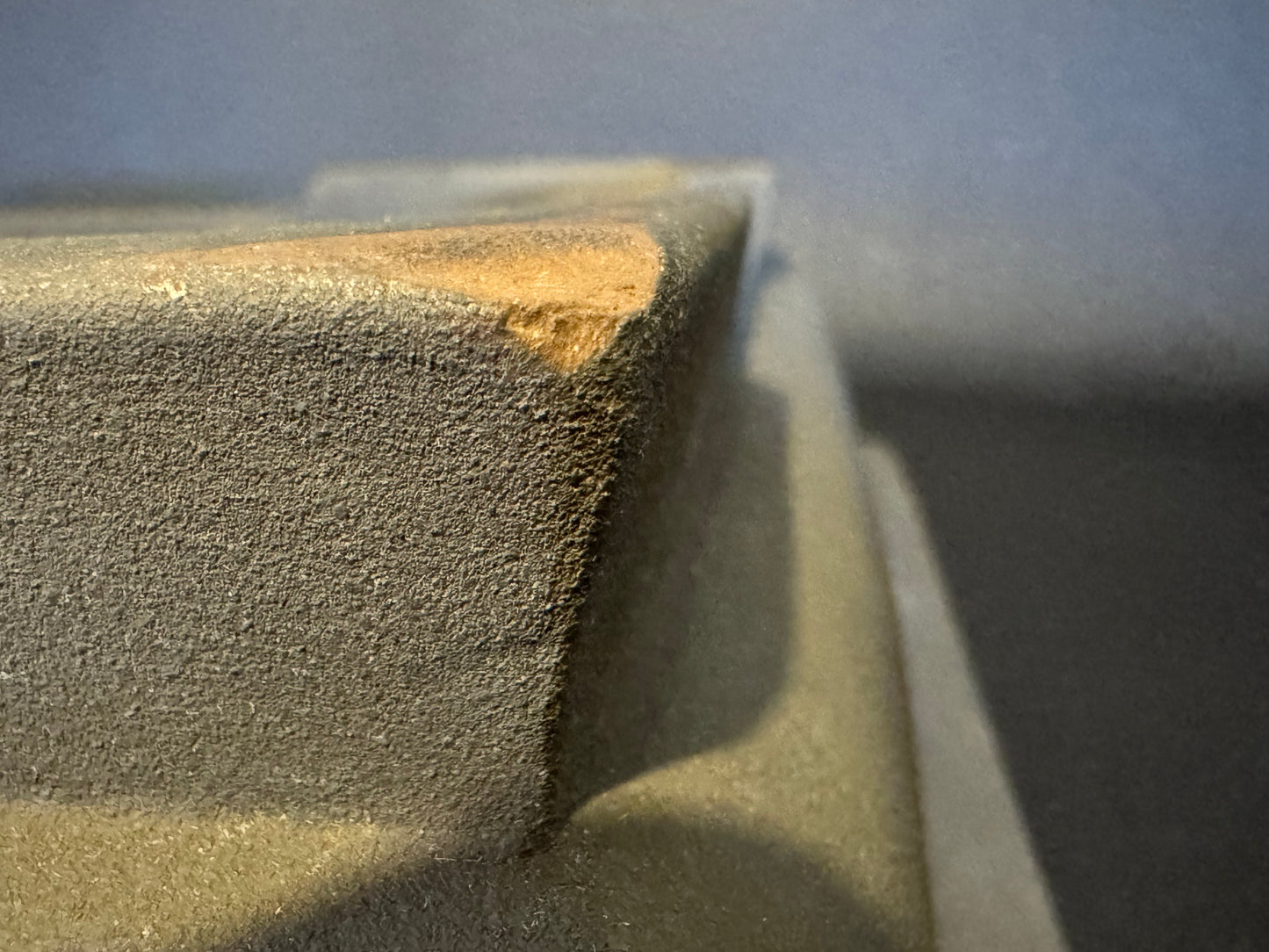
The pot is formed from a dark grey unglazed Tokoname clay (暗灰色常滑無釉土 / ankai-shoku Tokoname muyu-tsuchi). Its subtle granular texture and understated firing variation give the surface considerable tsuchi-aji (土味), with muted charcoal, grey and warmer earthy tones appearing naturally across areas of the clay. This restrained surface character gives the pot a particularly strong shibui (渋い) aesthetic.
The surface also shows natural signs of age and use 経年変化 / keinen henka, with gentle variations in tone and areas of developed keshiki (景色) adding depth and individuality to the otherwise disciplined architectural form.
The pot stands on four recessed, outward-set, angled rounded cut feet (斜め丸切足 / naname maru-kiri ashi). The feet are formed as part of the body and positioned discreetly beneath the lower section, projecting slightly outward to provide a broad and stable stance. Their softly rounded angled cuts create a subtle visual lift beneath the vessel and soften the transition between the strong rectangular body and the base.
The foot treatment is particularly well suited to a pot of this scale. The broad recessed placement 落とし足 / otoshi-ashi keeps the substantial body visually grounded while the angled rounded cut-outs introduce a restrained sense of movement 動き / ugoki beneath the otherwise clean architectural form.
The interior 鉢内 / hachinai is broad and carefully finished, with a clearly defined internal rim (内縁 / uchi-en) following the rectangular perimeter and neatly framing the planting area 植込み部 / uekomi-bu.
The drainage arrangement consists of six drain/wiring holes (水抜き穴・針金穴 / mizunuki-ana・harigane-ana) in total. Two larger central holes serve as the principal drainage holes (水抜き穴), while four additional holes positioned towards the corners provide further drainage and practical anchoring points 針金固定 / harigane kotei for securely tying down the root mass of a substantial bonsai.
The underside 鉢底 / hachizoko is carefully finished and bears the impressed Seizan 静山 seal (落款 / rakkan), confirming the maker. The construction of the underside also clearly reveals the broad recessed feet and thoughtful arrangement of the six drainage/wiring holes.
With its impressive 61.5cm rectangular form (長方鉢), pronounced outward-projecting lip (外張り口縁), dark unglazed clay 無釉土, recessed angled rounded cut feet (斜め丸切足) and practical six-hole drainage arrangement, this is a commanding Tokoname container with the visual strength required for a large mature bonsai while retaining a refined sense of shibui (渋い) and chowa (調和).
External dimensions / 外寸: 61.5 × 41.6 × 10.0cm
Internal dimensions / 内寸: 55.2 × 35.4 × 7.0cm
Condition / 状態: Very good overall condition. There are a few small chips to the feet, clearly visible in the photographs. Although these are minor and do not affect the pot's structural integrity, stability, or practical use, and mainly visible from below.
A price adjustment has been made to compensate for these minor flaws.
Please refer carefully to the photographs for the condition.
Free Shipping to UK Mainland / 英国本土送料無料
About the Potter – SEIZAN 静山 / Kataoka Makoto 片岡 誠
SEIZAN 静山, Master Kataoka Makoto 片岡 誠, is associated with the specialist tradition of Tokoname-yaki (常滑焼) bonsai pottery in Aichi Prefecture. His work demonstrates a strong command of proportion, structural balance and the practical requirements of serious bonsai cultivation.
Large containers such as this example demand particular control during forming, drying and firing, especially where broad rectangular proportions and a low architectural profile must remain structurally balanced. The restrained use of natural unglazed clay (無釉土) places particular emphasis on tsuchi-aji (土味), form 形 / katachi and craftsmanship 手仕事 / teshigoto.
Collector’s Note / コレクターズノート:
This substantial SEIZAN 静山 pot is particularly appealing for its impressive scale and disciplined architectural treatment. At 61.5cm, it offers the planting capacity required for a mature bonsai while retaining a remarkably controlled profile.
The pronounced sotobari koen (外張り口縁) gives the upper body considerable presence, while the four recessed, outward-set naname maru-kiri ashi (斜め丸切足) provide a distinctive and carefully resolved foundation. Their angled rounded cuts soften the substantial rectangular body and create an elegant shadow beneath the vessel.
The dark grey unglazed Tokoname clay (暗灰色常滑無釉土), mature tsuchi-aji (土味), impressed Seizan seal (静山落款) and practical arrangement of six drain/wiring holes (水抜き穴・針金穴) combine to make this a strong example of large-scale Tokoname bonsai pottery (常滑盆栽鉢), suitable both for serious cultivation and for a collection of important contemporary Japanese bonsai ceramics.
Share