

Sugi Bonsai
SYU-ZAN 舟山 (Suzuki Shinji (鈴木伸二)) - 愛知県 – 9.0cm Round Drum 丸太鼓形 – Unglazed Purple Clay 無釉紫泥
SYU-ZAN 舟山 (Suzuki Shinji (鈴木伸二)) - 愛知県 – 9.0cm Round Drum 丸太鼓形 – Unglazed Purple Clay 無釉紫泥
Couldn't load pickup availability
Personal Collection: Not for Sale!
But if you really want it, ping me!
Product Details / 鉢の詳細
Region / 産地: Aichi Prefecture(愛知県), Japan 日本
Workshop / 工房: Togo, Aichi Prefecture(愛知県東郷)
Potter / 作家: Syu-Zan(舟山)– Suzuki Shinji(鈴木伸二)
Form / 形状: Round Drum Form(丸太鼓形 – maru taiko-gata)
Finish / 仕上げ: Unglazed Purple Clay(無釉紫泥 – muyu shidei)
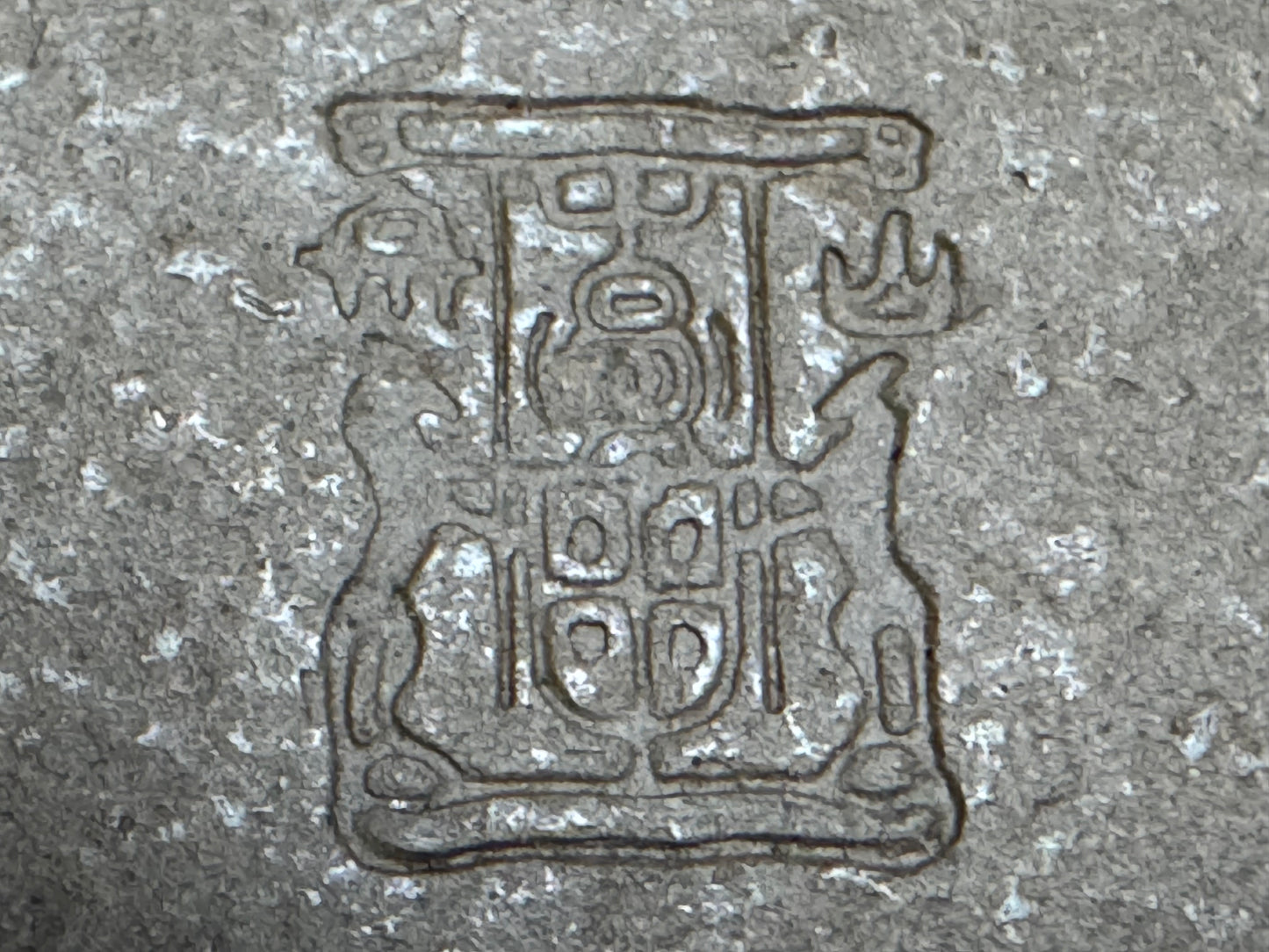
Mark / 落款: Very early impressed Syu-Zan seal(舟山古印
Description / 説明:
A charming vintage artisan-made Japanese bonsai pot(和鉢 – wabachi)by the highly regarded Syu-Zan(舟山), Suzuki Shinji(鈴木伸二), displaying a remarkably strong architectural character despite its compact 9.0cm size.
The pot is formed in a low, broad round drum form(丸太鼓形 – maru taiko-gata), with almost vertical body walls and a compact, grounded profile. Its proportions are simple and powerful, giving this small container a strong sense of 安定感(anteikan – stability).
The defining feature is the distinctive rivet decoration(鋲飾り – byo-kazari) encircling the body. Two rows of individually formed rivet-like bosses run around the upper and lower sections of the pot, creating a classical drum-like appearance. Their slight variation in form and spacing reinforces the handmade character of the piece and gives the surface a lively, tactile quality.
Between the two rows of rivets, the central wall remains restrained and undecorated, allowing the natural clay surface to remain an important part of the composition. This balance between ornament and simplicity gives the pot a strong sense of 渋み(shibumi – understated refinement).
The pot sits on a low drum-style foot(太鼓足 – taiko-ashi), subtly recessed beneath the body. This gives the vessel a slight visual lift while maintaining its broad, compact silhouette and excellent stability.
The unglazed clay is particularly attractive, displaying a subdued purple-grey to brown-purple tone(紫泥系 – shidei-kei) with a coarse, naturally irregular surface. The clay has excellent 土味(tsuchi-aji – character of the clay), with visible texture, firing variation and age-related surface changes adding depth and individuality.
Over time, the surface has developed an appealing 経年の味わい(keinen no aji – character acquired through age), giving the pot a strong period feel and enhancing the visual richness of the clay.
The base bears a very early impressed Syu-Zan seal(舟山古印). This highly stylised pictorial chop is notably different from the more familiar 舟山 marks seen on later pieces and is regarded as an early form of his potter's seal. Its presence adds considerable collector interest and strengthens the sense of age and individuality of this small pot.
The combination of purple clay(紫泥), double rivet decoration(鋲飾り), compact drum form(太鼓形), low drum foot(太鼓足)and early impressed seal(舟山古印) gives this piece considerable presence despite its diminutive scale.
At only 9.0cm in diameter, it would be especially well suited to shohin(小品) or smaller bonsai compositions where the pot itself can contribute strongly to the overall character without overwhelming the tree.
External Dimensions / 外寸: 9.0 × 2.8cm
Internal Dimensions / 内寸: 8.1 × 2.3cm
Condition / 状態: Excellent!
非常に良好な状態です。
Collector's Note / コレクターズノート
Suzuki Shinji(鈴木伸二), artist name Syu-Zan(舟山), 1928–1988, is regarded as an important Japanese bonsai-pot maker of the post-war period. Born in Tsu City, Mie Prefecture(三重県津市), Suzuki initially pursued a career in banking before leaving the profession in 1971 to devote himself fully to bonsai ceramics.
Working in Togo, Aichi Prefecture(愛知県東郷), Syu-Zan developed a distinctive approach strongly influenced by classical Chinese bonsai containers, particularly the antique pottery traditions associated with Yixing(宜興).
An important part of his work was his fascination with clay itself. He experimented with blended clay bodies, including Chinese and Japanese clays, seeking the depth of colour, texture and surface character associated with older Chinese containers. This emphasis on the ceramic body resulted in the distinctive 土味(tsuchi-aji) for which his unglazed work is particularly appreciated.
His pots frequently combine classical proportions with strong but restrained profiles and carefully considered decorative details. This small example demonstrates that philosophy especially well: the double row of rivet decoration(鋲飾り) gives the pot considerable character, while the broad undecorated central body allows the clay itself to remain visually dominant.
This example is especially interesting because of the very early form of the impressed Syu-Zan seal(舟山古印) found on its base. Combined with the coarse purple clay(紫泥), individually worked rivets, low drum-style foot and naturally aged surface, the early mark gives the piece a particularly strong sense of period and helps distinguish it from more commonly encountered later Syu-Zan pots.
Share