

Sugi Bonsai
SYU-ZAN 舟山, (Suzuki Shinji 鈴木伸二) – 愛知県 – 43.5cm Oval 楕円形
SYU-ZAN 舟山, (Suzuki Shinji 鈴木伸二) – 愛知県 – 43.5cm Oval 楕円形
Couldn't load pickup availability
Product Details / 鉢の詳細
Region / 産地: Aichi Prefecture(愛知県), Japan 日本
Workshop / 工房: Togo, Aichi Prefecture(愛知県東郷)
Potter / 作家: Syu-Zan(舟山)– Suzuki Shinji(鈴木伸二)
Form / 形状: Oval(楕円形 – daen-gata)
Finish / 仕上げ: Unglazed(無釉 – muyu)
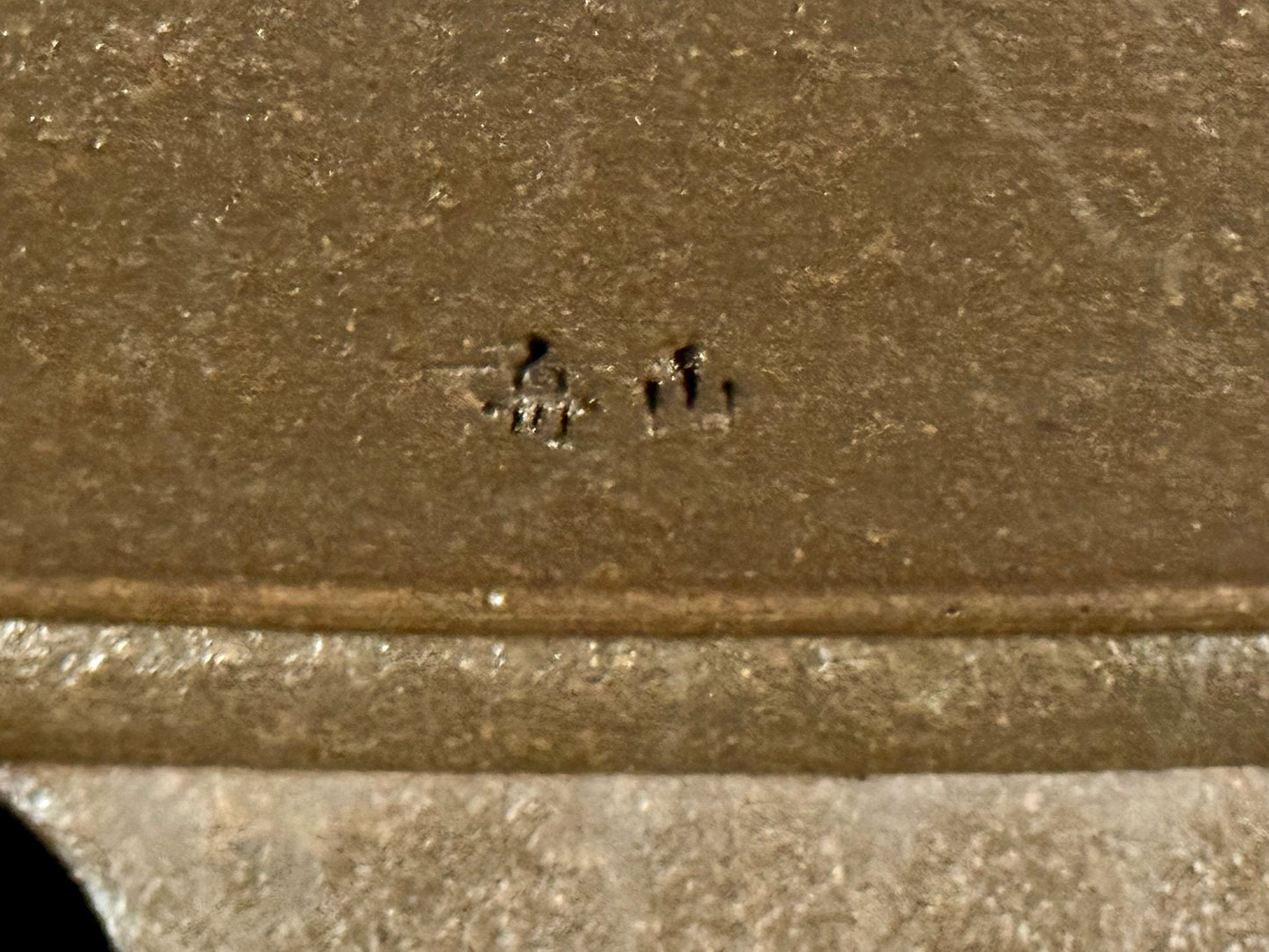
Mark / 落款: Early impressed Syu-Zan seal(舟山古印)together with two small exterior impressed seals(小印), one positioned on each side close to the basal band(腰帯)
Description / 説明:
A substantial vintage artisan-made Japanese bonsai pot(和鉢 – wabachi)by the highly regarded Syu-Zan(舟山), Suzuki Shinji(鈴木伸二), displaying the refined proportions, expressive clay character(土味 – tsuchi-aji)and restrained aesthetic for which his unglazed work(無釉鉢 – muyu-bachi)is particularly appreciated.
At 43.5cm, this is a generously proportioned oval form(楕円形 – daen-gata) with a long, low silhouette(低い姿 – hikui sugata)and beautifully controlled horizontal movement. The walls rise with a gentle outward curve towards the upper edge, producing a soft yet substantial profile with an excellent sense of 均整(kinsei – proportion) and 安定感(anteikan – stability).
The upper profile is particularly refined. A broad projecting lip(口縁 – koen) follows the complete oval contour and is finished with a delicate raised outer border(縁取り – fuchidori). This subtle architectural detail gives the rim additional definition while retaining the quiet and restrained character(渋み – shibumi)of the vessel.
The lower body is defined by a clearly articulated basal band(腰帯 – koshi-obi), which follows the full oval circumference immediately above the feet. This provides a strong visual counterbalance to the projecting upper lip and creates a composed transition between the body(胴 – do)and base.
Particularly noteworthy are the two broad recessed feet(内込み足 – uchikomi-ashi). Each is formed in a softly curved, almost half-moon profile(半月形 – hangetsu-gata), following the natural silhouette and curvature of the oval body. Their recessed positioning keeps the support structure discreet from normal viewing height while creating a subtle visual lift beneath the pot and preserving its long, elegant horizontal line.
The unglazed clay(無釉土 – muyu-tsuchi)displays a warm brown to muted ochre-brown tone with subtle natural variation across the surface. The gently granular texture gives the pot excellent 土味(tsuchi-aji), allowing the inherent quality of the clay(土 – tsuchi)to remain central to the aesthetic.
Age and previous cultivation have further enriched the surface, producing an attractive 経年の味わい(keinen no aji – character acquired through age) and natural 景色(keshiki). These variations in tone and texture give the pot depth and maturity while reinforcing its understated 侘寂(wabi-sabi) character.
The interior(鉢内 – hachinai)is generously proportioned and follows the flowing oval architecture of the exterior. The underside(鉢底 – hachizoko)is arranged with four drainage holes(水抜き穴 – mizunuki-ana)and four smaller wiring holes(針金穴 – harigane-ana), providing effective 排水(haisui – drainage) and secure 針金固定(harigane kotei – wire anchoring) for practical bonsai cultivation.
Of particular collector interest is the unusual group of markings found on this pot. The underside bears a simple square, double-framed impressed Syu-Zan seal(舟山印), with the characters 舟山 arranged vertically within the frame. This restrained form is markedly different from the more elaborate pictorial seals encountered on other Syu-Zan works and appears consistent with an early Syu-Zan seal(舟山古印).
In addition to the principal base seal, the pot carries two small impressed seals(小印 – koin)on the exterior, with one positioned on each side close to the basal band(腰帯). These discreet supplementary marks are an especially interesting feature and add considerably to the individuality and collector appeal of the piece.
The combination of the 楕円形(daen-gata) form, broad bordered 口縁(koen), defined 腰帯(koshi-obi), two recessed 半月形(hangetsu-gata) feet, warm 無釉土(muyu-tsuchi), mature 土味(tsuchi-aji) and unusual early marking arrangement gives this pot considerable presence while retaining the quiet dignity and 渋み(shibumi) characteristic of Syu-Zan's work.
External Dimensions / 外寸: 43.5 × 32.9 × 7.8cm
Internal Dimensions / 内寸: 37.5 × 27.1 × 5.9cm
Condition / 状態: Excellent!
非常に良好な状態です。
Free Shipping to UK Mainland / 英国本土送料無料
About the Potter / 作家について – Syu-Zan 舟山, Suzuki Shinji 鈴木伸二
Suzuki Shinji(鈴木伸二), artist name Syu-Zan(舟山), 1928–1988, is regarded as an important Japanese bonsai-pot maker(盆栽鉢作家)of the post-war period.
Born in Tsu City, Mie Prefecture(三重県津市), Suzuki initially pursued a career in banking. In 1971, at the age of 43, he left the profession and devoted himself fully to the creation of bonsai ceramics(盆栽陶芸).
Working in Togo, Aichi Prefecture(愛知県東郷), Syu-Zan established himself as an independent potter and developed a distinctive ceramic language strongly influenced by classical Chinese bonsai containers(中国古鉢 – Chugoku kobachi), particularly the antique pottery traditions associated with Yixing(宜興).
An especially important aspect of his work was his fascination with clay(土 – tsuchi). Syu-Zan experimented with blended clay bodies, including Chinese and Japanese materials, seeking the colour, texture and depth associated with antique Chinese containers. This emphasis on the natural ceramic body contributed to the distinctive 土味(tsuchi-aji) for which his unglazed pots(無釉鉢)are particularly admired.
Rather than merely reproducing antique Chinese forms, Syu-Zan interpreted their proportions and restrained aesthetics through a distinctly Japanese sensibility(日本的美意識 – Nihonteki bi-ishiki). His work frequently demonstrates a sophisticated relationship between form(形), rim(口縁), feet(足), clay(土味), balance(均整)and ageing(経年変化).
Syu-Zan's professional ceramic career lasted from 1971 until his death in 1988, yet during this relatively short period his work became highly respected within Japanese bonsai circles. His pots have been associated with important bonsai exhibition displays, including Kokufu-ten(国風展), and surviving examples are increasingly appreciated for their craftsmanship, clay quality and distinctive interpretation of classical Chinese forms.
His artistic influence continued through his apprentice Sen-Syu(仙舟), who carried elements of his teacher's philosophy and ceramic approach into his own work.
Collector's Note / コレクターズノート
This substantial 43.5cm Syu-Zan(舟山) oval is particularly interesting because of its unusual combination of form, clay and markings.
The main impressed 舟山 seal on the underside is a restrained double-framed square mark, visually distinct from Syu-Zan's more elaborate pictorial chops. Its simple construction and vertically arranged characters appear consistent with an early seal(舟山古印), making it especially worthy of attention from collectors studying the development of Syu-Zan's marks.
Equally noteworthy are the two small exterior seals(小印), with one discreetly positioned on each side near the basal band(腰帯). The presence of these supplementary marks alongside the principal base seal creates an unusual three-mark arrangement and gives this individual pot additional collector interest.
The broad 楕円形 silhouette, delicate bordered 口縁, defined 腰帯, two recessed 半月形の足, four drainage holes 水抜き穴, four wiring holes 針金穴, mature 経年の味わい, and excellent 土味 combine to produce a pot with considerable 造形美(zokei-bi – beauty of form) and 安定感(anteikan).
It is a particularly appealing example of Syu-Zan's larger unglazed work, bringing together 中国古鉢の影響(Chinese antique-pot influence), Japanese 侘寂(wabi-sabi), practical bonsai functionality(実用性 – jitsuyosei)and the understated sophistication of 渋み(shibumi).
Share