

Sugi Bonsai
YAMAAKI 山秋 – 3rd Generation Kataoka Toshio 山秋三代 片岡俊雄 – Tokoname 常滑市 – 40.0cm Octagonal 八角鉢 – Unglazed 無釉
YAMAAKI 山秋 – 3rd Generation Kataoka Toshio 山秋三代 片岡俊雄 – Tokoname 常滑市 – 40.0cm Octagonal 八角鉢 – Unglazed 無釉
Couldn't load pickup availability
Product Details / 商品詳細:
Region / 産地: Tokoname 常滑市, Aichi Prefecture 愛知県, Japan 日本
Kiln / 窯元: Yamaaki Kiln 山秋窯
Artist / 陶工: 3rd Generation Kataoka Toshio 三代目 片岡俊夫
Form / 形状: Octagonal 八角形 / Hakkakukei
Finish / 仕上げ: Unglazed 無釉 / Muyu
Construction / 作り: Handmade 手作り / Tezukuri
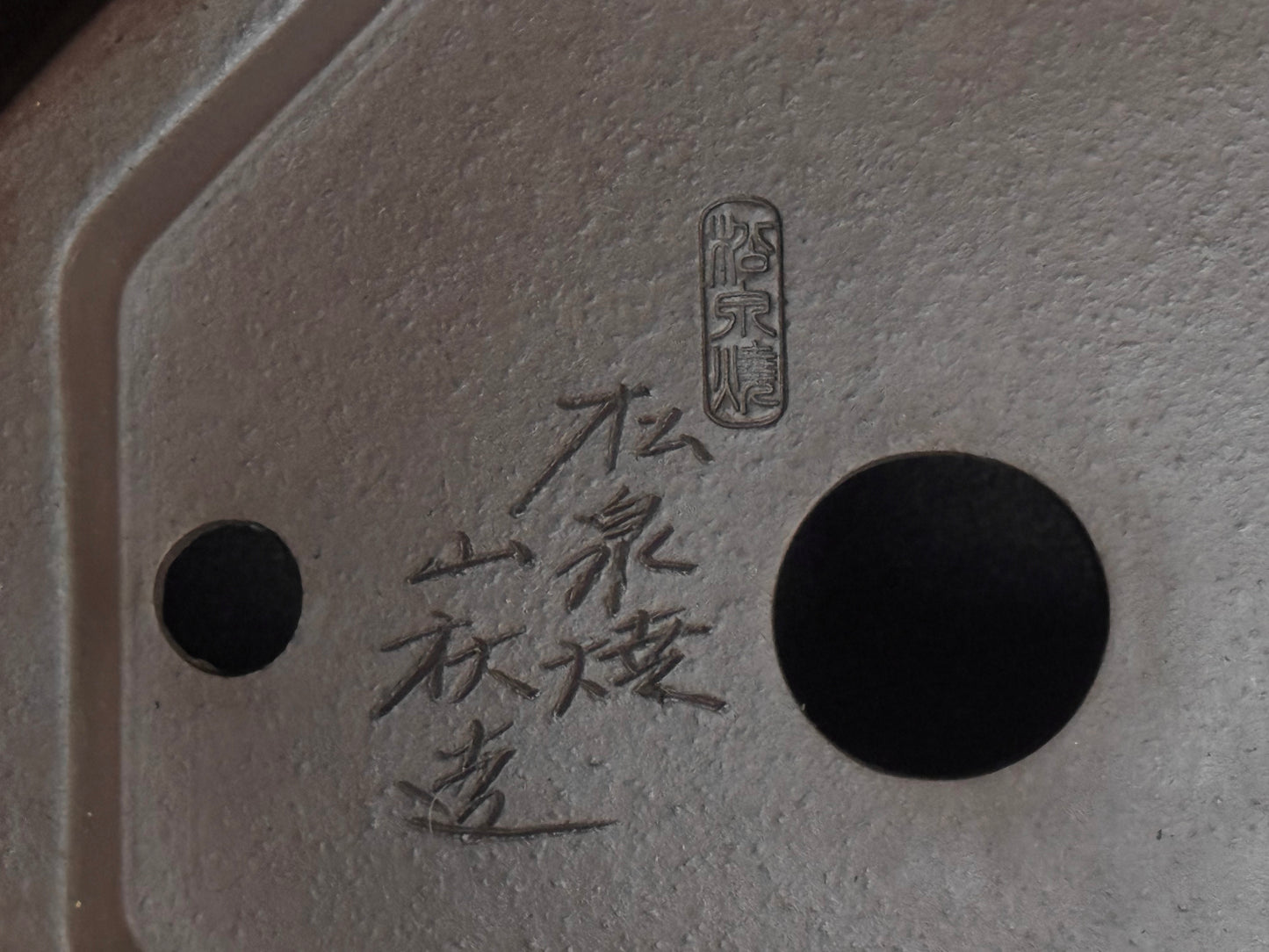
Signature / 銘: Hand-incised signature 手彫り銘 / Tebori-mei
Seal / 落款: Impressed Yamaaki seal 山秋印 / Yamaaki-in
Description / 説明:
A substantial vintage, artisan-made Japanese bonsai pot 日本盆栽鉢 from the celebrated Yamaaki Kiln 山秋窯 of Tokoname 常滑市, made by 3rd Generation Kataoka Toshio 三代目 片岡俊夫. Measuring an impressive 40cm across and almost 20cm deep, this is a powerful handmade octagonal bonsai pot 八角鉢 (hakkaku-bachi) displaying the strong architectural construction and careful detailing associated with the finer handmade works of the Kataoka family.
The body is formed as a strongly defined eight-sided octagon 八角形 (hakkakukei). From the substantial lower body 胴 / do, the walls rise with a gentle outward inclination before flaring more decisively towards the upper edge 外反り / sotozori. This gives the pot a broad and commanding silhouette while maintaining excellent 安定感 (anteikan – visual stability).
Each of the eight exterior faces is individually articulated by a carefully formed window frame 窓枠 (madogaku) surrounding a plain central field. These are not recessed panels; the framing itself defines the window and stands subtly proud of the main body surface. The shape of each window follows the proportions and changing angles of its respective octagonal face, creating a repeated architectural rhythm 律動 / ritsudo around the entire pot.
The handmade nature of these frames can be appreciated in their subtle individual variations. Rather than appearing mechanically uniform, they retain the small differences characteristic of 手仕事 (teshigoto – hand workmanship), contributing considerably to the pot’s 造形美 (zokei-bi – beauty of form).
Above the framed windows, the walls flare outward into a broad projecting lip 口縁 (koen). The lip is further refined by a subtle outer border 縁取り (fuchidori) which follows the complete octagonal contour. This restrained finishing line gives additional definition to the upper edge and emphasises the geometry without making the rim appear excessively heavy.
At the bottom of the body is a clearly defined basal band 下帯 (shita-obi), again following the complete octagonal contour. This lower band provides an important visual counterbalance to the broad projecting lip above, effectively framing the windowed body between two strong horizontal architectural elements.
Particularly noteworthy is the unusual treatment of the feet 足 (ashi). The supports are recessed 落とし足 (otoshi-ashi) beneath the basal structure rather than projecting conspicuously beyond it, allowing the clean octagonal silhouette of the pot to remain uninterrupted.
The foot structure is also split into two distinct sections, with the individual sections carefully following the angles and changing direction of the octagonal body. The intervening cut-outs 切込み / kirikomi divide the supports while retaining the geometric relationship between the feet and the basal band above. Viewed normally, the feet remain discreetly tucked beneath the body, yet provide the substantial pot with a convincing sense of 安定感 (anteikan – stability).
This careful repetition of geometry is one of the strongest aspects of the design. From the bordered octagonal lip 口縁・縁取り, through the eight framed windows 窓枠, down to the basal band 下帯 and finally the divided recessed feet 落とし足, the same architectural language is maintained throughout the entire pot. The result is an excellent example of 造形美 (zokei-bi) and 美的均衡 (biteki kinko – aesthetic balance).
The unglazed Tokoname clay 常滑無釉土 displays an attractive deep reddish-brown to chocolate-brown colour, with subtle natural variations across the surface. The restrained finish allows the inherent 土味 (tsuchi-aji – character of the clay) to remain clearly visible. Rather than relying upon decoration, the pot derives its character from proportion 比例 / hirei, geometry 形 / katachi, clay 土 / tsuchi, and craftsmanship 手仕事 / teshigoto, giving it the quiet sophistication associated with 渋み (shibumi – understated refinement).
Internally, the octagonal geometry continues into the generous planting chamber 鉢内 / hachinai. The base is pierced with five drainage and wiring holes 水抜き穴・針金穴 (mizunuki-ana / harigane-ana): one substantial central drainage hole 中央水抜き穴 accompanied by four smaller surrounding holes suitable for additional drainage 排水 / haisui and securing the tree with wire 針金固定 / harigane kotei.
The underside 鉢底 / hachizoko is especially important from a collector’s perspective. It bears both an impressed seal 印 / in and the hand-incised signature 銘 / mei of the maker. The visible hand-worked inscription distinguishes this example from ordinary unsigned production Yamaaki pots and reinforces its artisan-made character.
Overall, this is a particularly imposing Yamaaki bonsai pot. The combination of its substantial 40cm size, octagonal construction 八角形, eight framed windows 窓枠, broad bordered lip 口縁・縁取り, basal band 下帯, unusual split recessed feet 落とし足, and warm unglazed Tokoname clay 常滑無釉土 creates a pot of considerable presence. Despite its size, the restrained detailing prevents it from becoming overly decorative, allowing the container to retain the powerful yet quiet character appropriate for displaying a mature specimen bonsai.
Max External Dimensions / 最大外寸: 40.0 × 37.7 × 19.6cm
Internal Dimensions / 内寸: 33.5 × 31.7 × 17.0cm
Condition / 状態: Excellent! 非常に良好. There is some watermarking 水跡 / mizu-ato, but it disappears with a light application of oil, as shown in the photographs.
Free Shipping to UK Mainland / 英国本土送料無料
About the Potter / 陶工について – Yamaaki 山秋窯, 3rd Generation Kataoka Toshio 三代目 片岡俊夫
The Yamaaki Kiln 山秋窯 was established by Kataoka Akitsuga 片岡秋次 and subsequently fired by three generations of the Kataoka family in Tokoname 常滑, one of Japan’s historic pottery centres 日本六古窯. The kiln eventually went cold in 2011, bringing to an end one of the best-known names in modern Tokoname bonsai-pot production 常滑盆栽鉢.
Yamaaki became one of Tokoname’s most productive and respected bonsai-pot kilns, particularly renowned for its unglazed containers 無釉鉢. Gas firing ガス窯焼成 enabled the kiln to achieve a remarkable range of rich and subtle clay colours, often recalling the subdued tones and atmosphere of antique Chinese bonsai pots 中国古鉢.
While many production Yamaaki pots remain available, examples bearing hand-incised signatures 銘 (mei) are especially desirable. These individually worked pieces are associated with members of the Kataoka family themselves and consequently occupy a different position from standard unsigned production ware.
This large octagonal example demonstrates that distinction particularly well. Its complex handmade construction 手作り, framed windows 窓枠, carefully defined lip 口縁 and border 縁取り, basal band 下帯, divided recessed feet 落とし足, impressed seal 印, and hand-incised signature 銘 combine functionality 実用性 / jitsuyosei with 工芸美 (kogei-bi – beauty of craftsmanship).
It is not simply a container for a bonsai, but an accomplished example of the Tokoname tradition in which form 形, clay 土, proportion 均整, and function 実用性 are brought together into a harmonious whole 調和 / chowa.
Share